
The Moment Physics Stops Feeling Hard | How Practice Changes Learning
The Moment Physics Stops Feeling Hard
How Practice Changes the Way Your Brain Works
At some point in learning A-level Physics, something curious happens.
A student who once found every question overwhelming suddenly begins to recognise what to do. Problems that previously required intense concentration start to feel manageable — sometimes even straightforward.
From the outside, this can look like natural ability or intelligence.
In reality, it is something far more predictable.
It is how human learning works.
Fast Thinking and Slow Thinking
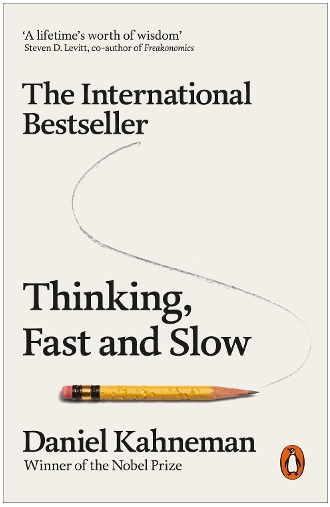
Psychologist Daniel Kahneman described two modes of thinking in his book Thinking, Fast and Slow.
System 1 thinking is fast, automatic and efficient.
It allows us to recognise patterns quickly, select relevant information, and ignore distractions without conscious effort.
System 2 thinking, by contrast, is slow and demanding.
It requires concentration, deliberate reasoning, and sustained mental effort.
When students first encounter A-level Physics, nearly everything requires System 2 thinking.
They must consciously decide:
which information matters,
which equation applies,
how quantities relate,
and what the question is really asking.
This is mentally expensive work.
Most people can hold only around four pieces of information in working memory at one time. Manipulating those pieces places genuine physiological demands on the brain — concentration increases, effort rises, and sustained attention becomes tiring.
This mental demand is known as cognitive load.
Cognitive Load: Why Physics Feels Difficult
Cognitive load is not a single thing. It has three distinct components.
Intrinsic Cognitive Load
This comes from the subject itself.
Physics problems often combine several ideas simultaneously — equations linking multiple variables or concepts interacting together. Early in learning, each element must be processed consciously, creating a heavy mental burden.
This load cannot be avoided.
The only way to reduce intrinsic load is through repeated practice until relationships become familiar and easier to process.
Extraneous Cognitive Load
This comes from unnecessary distractions.
Noise, interruptions, uncomfortable environments, background music, or divided attention all consume mental resources that should be available for learning.
Removing distractions does not make physics easier — but it allows students to use their limited mental capacity where it matters most.
A quiet, comfortable workspace genuinely improves learning efficiency.
Germane Cognitive Load
This is the effort devoted to understanding how learning works.
In A-level Physics, this often means studying exam papers themselves.
Strong students begin to notice patterns:
how early parts of a question guide later steps,
how examiners structure problems,
how calculations are signposted,
and what each section is designed to test.
This “thinking about thinking” helps students organise knowledge more effectively and apply it under exam conditions.
From Effortful to Automatic
Learning to drive provides a familiar comparison.
At first, driving feels impossibly complex. A learner must consciously manage mirrors, pedals, gears, signalling, positioning, observation and decision-making — all at once.
Every action requires deliberate attention.
Over time, however, these separate actions become integrated. Experienced drivers steer, change gear, monitor hazards and plan ahead almost automatically.
The task itself has not changed.
The brain has.
Through practice, effortful System-2 processes become automatic System-1 responses.
The same transition occurs in physics learning. Repeated exposure to problems builds connections in long-term memory, allowing students to recognise familiar structures quickly and respond efficiently during exams.
Why Learning Is Social
This transition rarely happens in isolation.
Physics educator Derek Muller, creator of Veritasium, emphasises that education is fundamentally a social activity.
Effective teaching is not simply about explanation.
Good teachers:
provide energy,
create accountability,
encourage persistence,
and ensure students complete the repeated practice required for mastery.
Understanding something once is rarely enough. Progress comes from sustained engagement — putting in the repetitions needed for difficult thinking to become automatic.
Teachers, tutors and learning communities help make that sustained effort possible.
When Physics Finally Feels Easier
When physics stops feeling impossibly hard, nothing mysterious has happened.
Students have simply spent enough time engaging in slow, effortful thinking for new skills to become automatic.
System 2 has done its work.
System 1 can now take over.
And what once required intense concentration becomes something students can access quickly and confidently — exactly when they need it most in an exam.